
Beijing Souvenirs: Local Products Worth Taking Home
For easy Beijing souvenirs, buy sealed pastries or small modern crafts from a named shop with a receipt. Qianmen and Wangfujing suit a central walk; Panjiayuan offers a wider craft browse.
- Central shopping: Qianmen and Wangfujing.
- Craft browsing: Panjiayuan, near Metro Line 10.
- Food gifts: read the ingredient, production and expiry labels.
- Fragile gifts: confirm the box and padding before payment.
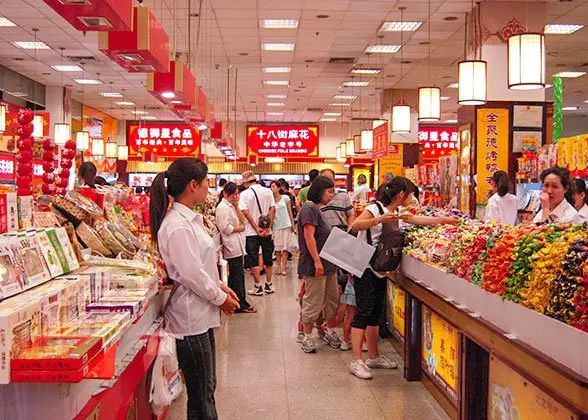
Where Should You Shop?
Use Qianmen for old-brand storefronts and packaged gifts during a south-central sightseeing day. Wangfujing has large stores where fixed prices and receipts are easier to compare.
Panjiayuan is better for prints, ceramics and browsing many stalls. It takes its own shopping block. Our Beijing shopping guide compares the districts.
Which Food Gifts Travel Well?
A sealed box of Beijing-style pastries is simpler to carry than a fresh snack. Read the ingredient list, storage instructions and expiry date on the exact box.
Tea can also be packed, but a Beijing shop does not mean the tea leaves were grown in Beijing. Ask for the tea type and origin. Check your destination’s food import rules before choosing meat or fresh products.
What Crafts Are Worth Browsing?
Look at contemporary prints, paper cuts, cloisonné-inspired pieces and small textiles. Ask whether a ceramic or enamel item is handmade, factory made or a reproduction.
Compare the finish and price at two or three sellers. For a gift, a named modern maker and clear material are more useful than an unproven “antique” story. See our craft shopping guide.
When Should You Buy and Pack?
Shop near the end of the trip so food has less time in a warm room. Keep boxed pastries flat and put breakable crafts in padded hand luggage if your carrier permits.
Save the shop address and receipt before leaving. If a gift is bulky, ask the seller to show the packed dimensions; your airline baggage allowance still applies.
What Common Mistakes Cost Money?
Do not pay for a food box from its front image alone. The actual label tells you the quantity, ingredients and shelf life.
Do not assume every “Beijing souvenir” is made locally. Ask where it was produced if origin matters. Avoid items made from protected wildlife or uncertain old objects.
FAQ: What Else Should You Know?
Is tea grown in Beijing? Tea sold in Beijing often comes from other provinces. Read the origin on the package if it matters to you.
Can I bring Beijing pastries home? Many sealed products travel well, but destination rules vary. Check ingredients and import conditions before buying.
Is Panjiayuan good for quick shopping? It is best when you have time to compare stalls. Qianmen or Wangfujing fits a shorter central stop.