
Were the Terracotta Warriors Real People?
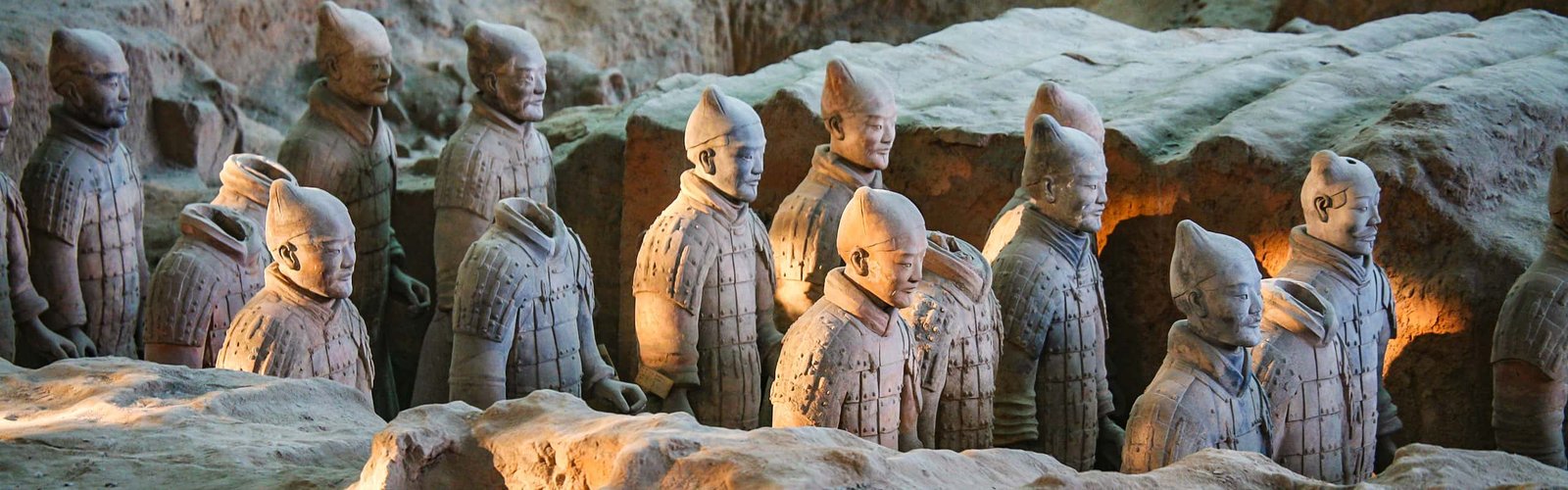
No human bodies are inside the Terracotta Warriors. They are clay sculptures made in parts, assembled and fired for Qin Shi Huang’s burial complex.
Their lifelike faces reflect skilled sculpting, not preserved people.
At a glance
- Material: fired clay, with figures assembled from multiple parts.
- The museum has three main excavation pits; Pit 1 holds the largest formation.
- Look at broken figures to understand walls, joins and hollow spaces.
How Were the Figures Made?
Craft workers formed bodies and heads in sections, added surface details and fired the clay. Armor patterns and hair were modeled on the outside.
Broken pieces show ceramic walls and joins. A complete standing warrior can hide those construction clues.
Why Do the Faces Look Different?
Faces vary in shape, hair and expression. Variation does not mean each sculpture contains or directly copies a named soldier.
Workshops could vary parts and add hand-finished details. The figures were also painted, although much original color did not survive exposure.
What Should You Look for at the Museum?
Start with a broken section, then compare a complete figure. Pit 1 shows the scale of the army; other pits show different formations.
Read the construction displays before deciding what a face means. The central tomb guide explains why the mound is a separate question.
How Long Should You Allow?
Give the three pits and display areas a half day, plus the journey from Xi’an. Crowds can slow movement at the viewing rails.
Wear comfortable shoes and follow the museum route. The figures are seen from designated visitor areas, not by walking among them.
Which Myths Cause Confusion?
A lifelike face does not prove a person was sealed inside. Broken clay figures offer a direct view of their material.
Do not confuse the warriors’ pits with Qin Shi Huang’s unopened central burial chamber. They are separate parts of the wider site.
FAQ: What else should you know?
Are there skeletons inside the warriors?
No. The figures are ceramic structures. Archaeologists can inspect broken sections and construction joins.
Were the figures once painted?
Yes. They originally carried color. Much pigment is fragile after exposure.
Can visitors enter the emperor’s tomb?
No. The central burial chamber is not open to visitors. The warrior pits are the main museum visit.