
Qin Shi Huang’s Death: What Is Actually Known?
Qin Shi Huang died in 210 BCE during an imperial tour, according to the historical account in the Shiji. The precise medical cause is unknown; elixir poisoning and murder claims remain theories.
- Year: 210 BCE.
- Main written account: Shiji by Sima Qian.
- Setting: a tour that ended near Shaqiu, away from the capital.
What Does the Written Account Say?
The Shiji places the emperor’s final illness on a tour and his death near Shaqiu. The court then managed the news and the journey back. These details frame the political crisis after his death.
The text was written after the events, so it is not a modern medical chart. The Fusu guide explains why the succession mattered.
Which Explanations Are Plausible?
Illness is the basic account, but the exact disease is not recorded. Stories about mercury or other longevity medicines raise a possible risk. They do not show what dose the emperor took at the end.
An assassination theory needs a clear mechanism and supporting source. Political benefit alone cannot prove murder. Keep these possibilities distinct from the recorded death and later succession.
How Did Succession Change the Story?
The court’s handling of the news affected who could issue orders. Li Si, Zhao Gao and the emperor’s sons appear in accounts of the aftermath. Their actions explain the secrecy better than an imagined autopsy.
The Huhai guide follows the son who became the second Qin emperor. Read that outcome separately from the unknown medical cause.
Where Can Travelers Explore the Context?
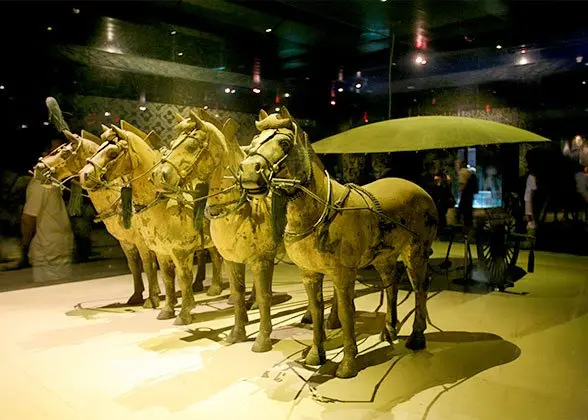
Use a Qin history museum or the mausoleum area to discuss the era, not to seek a death scene. The final tour ended away from the Lintong burial site. A chariot model shows travel technology, not a cause of death.
Allow a short discussion stop while viewing Qin objects. Keep the timeline of death, concealed news and succession clear before adding theories.
What Common Claims Need Care?
Do not say mercury poisoning was proven by a palace object or soil sample. Burial-site mercury questions concern the tomb, not a diagnosis of the emperor.
Do not present a dramatic film scene as a surviving eyewitness account. Start with the written chronology and leave the medical question open.
FAQ: What Should You Know?
Where did Qin Shi Huang die? The Shiji places his death near Shaqiu during a tour. That is away from his later burial site near Xi’an.
Was mercury poisoning proven? No. It is a theory linked to longevity practices. The precise cause of death remains unknown.
Did his death lead to a succession crisis? Yes. Accounts describe secrecy and disputed orders after his death. Huhai became the second Qin emperor.