
Hangzhou History: Evidence and City-Reading Guide
Independent Hangzhou history guide; archived evidence reviewed in August 2026
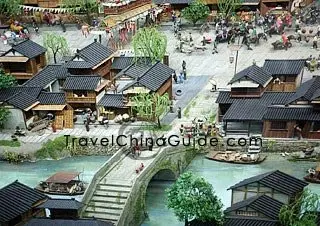
Choose one historical transition that the day can actually explain: Liangzhu archaeology, canal and regional exchange, Wuyue state formation, Southern Song capital life, craft and commerce, or the modern city’s interpretation of these pasts. Connect one museum or controlled site to a public urban sequence instead of using West Lake as proof of every period.
Decide What This Place Adds to a Hangzhou Itinerary
Choose one historical transition that the day can actually explain: Liangzhu archaeology, canal and regional exchange, Wuyue state formation, Southern Song capital life, craft and commerce, or the modern city’s interpretation of these pasts. Connect one museum or controlled site to a public urban sequence instead of using West Lake as proof of every period.
Understand the Place before You Visit
The inherited essay moves from a roughly five-thousand-year Liangzhu past through Spring and Autumn geography, Sui canal construction, Wuyue prosperity and Buddhism, Northern Song commerce and the Southern Song capital. It then joins silk, printing, paper, porcelain, tea, Marco Polo and romantic West Lake imagery into one seamless ascent. This chronology supplies useful research prompts, but phrases such as “biggest,” “most populous,” “only peaceful” or “most beautiful” need a defined date, comparison set and source. Liangzhu material culture, Qiantang and Yuhang place names, canal infrastructure, Wuyue governance and Southern Song Lin’an belong to different evidence systems. Archaeological context comes from stratigraphy, dating, objects and settlement study; capital history may use chronicles, inscriptions, urban archaeology, maps and excavated industries. Later museums and scenic interpretation select what visitors see. Ask how a label dates jade, pottery, kiln material or city fabric, whether an exhibit is original or reproduced and how the modern display separates evidence from literary memory.
Plan Tickets, Identity Checks and Current Access
Confirm the current museum or archaeological venue, official name, public entrance, reservation and identity process, open galleries, temporary exhibitions, photography, last admission, conservation closures, language support and accessible route. For a public city walk, verify lawful access and whether a named gate, street, canal segment or view is surviving fabric, reconstructed interpretation or a modern commemorative location. Save who answered, when, for which branch and which date.
Choose Transport, Entrance and a Realistic Route
Protect one time-sensitive institution first, then add a compact public sequence that answers the same question. A Liangzhu-focused day, Grand Canal study and Southern Song city walk are separate geographies; do not combine them because one overview page mentions all three. Record exact transit exits, walking surfaces, the museum-to-street handoff and a final dependable return.
Manage Walking, Accessibility and Family Needs
Audit station and curb access, museum security, lifts, gallery distances, low light, seating, captions, audio, toilets and the surface of any canal or old-street extension. An accessible gallery-and-map route can still explain urban change when excavated areas, stairs or long outdoor transfers are unsuitable. Preserve an equal-purpose option and identify who owns every assistance handoff. Functional accessibility includes more than a step-free front door.
Visit with Cultural and Community Respect
Do not touch objects, lean over cases, photograph restricted material or treat burials, religion and political collapse as spectacle. Credit named archaeologists, craftspeople, communities and institutions when the evidence allows, while avoiding claims that present residents embody one unbroken ancient identity.
Prepare for Weather, Crowds and Closures
A closed gallery, uncertain identification, severe weather, inaccessible transfer or weakening return removes the outdoor extension first. Do not substitute an unverified reconstruction or commercial “ancient town” performance for the evidence the original route was meant to examine.
Travel Responsibly without Forced Shopping
Separate public space, museum admission, special exhibition, guiding, transport, books and replicas. A reproduction should identify its maker, material and source object; an alleged antique or archaeological item without lawful provenance is not an appropriate souvenir.
Hangzhou History FAQ
Can I rely on the old Hangzhou history page?
Use it only to identify research questions.
What should I decide first for Hangzhou history?
Choose one historical transition that the day can actually explain: Liangzhu archaeology, canal and regional exchange, Wuyue state formation, Southern Song capital life, craft and commerce, or the modern city’s interpretation of these pasts. Connect one museum or controlled site to a public urban sequence instead of using West Lake as proof of every period.
What must I verify before committing?
Confirm the current museum or archaeological venue, official name, public entrance, reservation and identity process, open galleries, temporary exhibitions, photography, last admission, conservation closures, language support and accessible route. For a public city walk, verify lawful access and whether a named gate, street, canal segment or view is surviving fabric, reconstructed interpretation or a modern commemorative location.
What fallback should I keep?
Use one verified museum collection, dated city map and accessible public viewpoint to explain a single period when the wider historical route cannot be completed.