
Palace of Great Brilliance: Residence and Storehouse
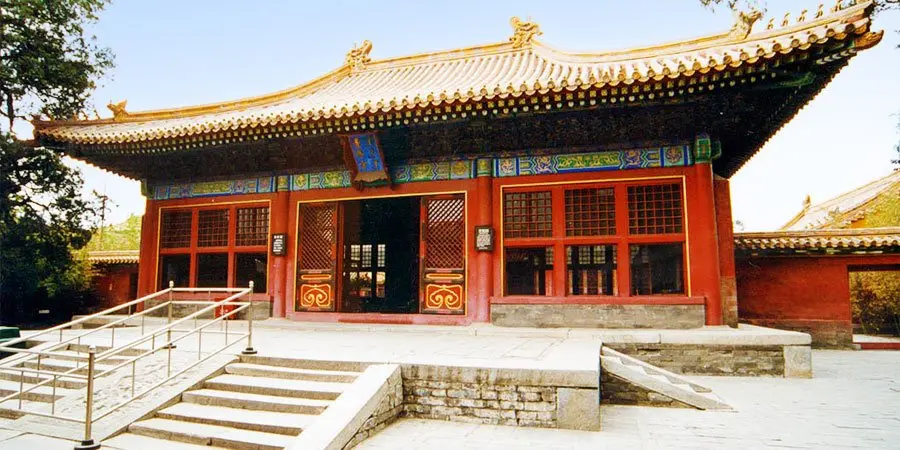
Jingyang Gong, the Palace of Great Brilliance, began as an eastern palace residence and later held books and paintings. Its rear buildings and changing use are more useful to visitors than the loose “cold palace” label.
- Chinese name: 景阳宫 / Jingyang Gong.
- Area: Six Eastern Palaces in the inner court.
- Historic shift: residence to book and painting storage.
How Can You Reach Jingyang Gong?
Enter through Meridian Gate and move north to the inner court. Follow signs for the eastern palace group, then find 景阳宫. The museum route guide shows how this branch connects to the main path.
The front court and rear area may have different barriers. A visible building is not a public doorway. Rejoin the approved northbound route after your stop.
Which Ticket and Access Rules Apply?
Palace Museum admission covers the general visit. Public access to Jingyang Gong can be narrower than access to the eastern group around it. Confirm the open court before planning a close look at the rear buildings.
Do not assume stored books or paintings are on permanent display here. The building’s historic use and the museum’s current exhibition program are separate matters.
What Should You Look At?
Compare the residential front court with the rear spaces tied to later storage. A change in use can explain altered doors, fittings or room labels without inventing a secret prison.
The phrase “cold palace” appears in popular storytelling, but it was not one fixed building type. Compare Jingyang with the nearby Palace of Eternal Harmony to see another eastern residential story.
When and How Long Should You Allow?
Use a short stop if only the outer court is visible. Add time if an exhibition or rear sightline is open. Keep your main visit oriented toward the Palace Museum’s north exit.
A quiet period helps you read small room signs. Rain and dense groups make narrow eastern connections slower, so do not build a tight schedule around this branch.
What Should You Avoid Assuming?
Do not tell visitors that one tragic resident explains every room. The palace held different functions over time. Its book and painting storage deserves a separate explanation.
Do not try a closed service passage to reach the rear. Observe from the public line and use displayed plans when the rear court cannot be seen.
FAQ: What Should You Know?
Is this an official “cold palace”? No single palace held that role throughout history. The label is a popular shortcut, not a reliable room description.
Can I see the stored paintings? Do not count on it. Current exhibitions determine which objects are visible.
Is the rear court always open? No. Follow the gate and barrier signs on your visit day. The front court may be your only view.