
Palace of Eternal Spring: Court and Performance
Palace of Eternal Spring is a western Forbidden City residence associated with a later connection to the Hall of Supreme Principle. That linked space and its court performance history make it a distinct stop, when the museum route allows entry.
- Area: Six Western Palaces.
- Distinct link: Hall of Supreme Principle complex.
- Historic angle: court performance within a changing residential setting.
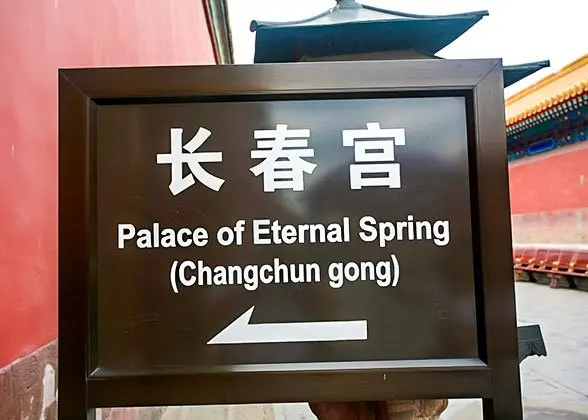
How Do You Reach Eternal Spring?
After entering through Meridian Gate, follow the central route north and turn toward the open Six Western Palaces path. Look for Eternal Spring’s own name sign. Do not assume a historic link to another hall is an open visitor passage.
The gate and route guide helps you return to the main northbound flow. Follow current barriers through this compact western area.
What Admission and Opening Rules Apply?
The palace is within the Palace Museum grounds, so plan museum admission first. Restoration or gallery work can close a courtyard for long periods. An open neighboring palace does not prove Eternal Spring is open.
Check the gate and any connected court separately on arrival. If access is closed, the current museum map can still show the relationship with Supreme Principle.
What Makes It Worth Seeing?
The residential court later changed as adjoining spaces were linked and used for performance. That gives you two questions: how people lived here, and how court entertainment altered the setting.
Compare the connected plan with the Hall of Supreme Principle guide. The buildings relate to each other, but a performance space is not the same as a throne hall.
When and How Long Should You Stop?
A short west-side stop fits after the central halls. Allow more time only if the connected court and displays are open. Keep a clear route to the museum’s north exit.
Morning or early afternoon leaves better light for exterior walls. Rain and crowds can make the narrow western lanes slower to cross.
What Mistakes Should You Avoid?
Do not turn a connection to Supreme Principle into a promise of free movement between the two. The museum decides which gates are public.
Do not reduce the palace to a single famous resident. Its building changes and performance setting tell a fuller story than a television scene or a souvenir label.
FAQ: What Should You Know?
Was Eternal Spring built as a theater? It began as a residential palace. Later changes linked its space with court performance. Read the open court as a place with more than one phase.
Can I walk straight into Supreme Principle? Not necessarily. A historic connection does not guarantee a public passage. Follow the current museum route.
Is the palace always open? No. Restoration and gallery work can limit access. Check the gate on your visit day.