
Hangzhou Public Bicycle and Cycling Safety Guide
Independent Hangzhou public bicycle planning guide; archived evidence reviewed in August 2026
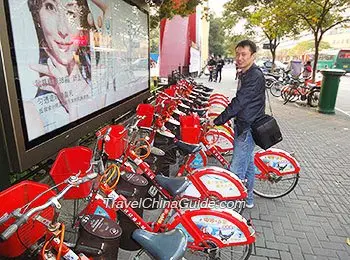
Cycle only when it improves a defined short connection or landscape sequence and every rider can use the route safely. Decide between a public docked system, commercial shared bicycle, private rental or no bicycle; each can have different account, identity, deposit, geofence, parking and support rules. A loop around West Lake is not automatically suitable because the map looks level or a guide calls cycling fun.
Decide What This Place Adds to a Hangzhou Itinerary
Cycle only when it improves a defined short connection or landscape sequence and every rider can use the route safely. Decide between a public docked system, commercial shared bicycle, private rental or no bicycle; each can have different account, identity, deposit, geofence, parking and support rules. A loop around West Lake is not automatically suitable because the map looks level or a guide calls cycling fun.
Understand the Place before You Visit
The old page describes a large public bicycle network, a service-card application process, deposits, rental periods, service points and an early free interval. It recommends bicycle travel near West Lake and explains a specific card workflow. The historical detail shows how the system once worked, but operator structure, app access, foreign-user eligibility, deposits, prices, docking and riding controls may change. Repeating them as current instructions could strand a traveler with an unusable account or bicycle. Access to a bicycle does not establish a legal route. Pedestrian promenades, scenic paths, roads, tunnels, bridges and protected areas can use different cycling controls. Shared bicycles may be restricted by geofencing or designated parking; a physical lock can close while the trip remains open in an account. Traffic literacy, bicycle fit, brakes, lights, weather, road surface and group communication matter more than the number of rental points. Separate stable orientation from facts that expire.
Plan Tickets, Identity Checks and Current Access
Confirm the current operator, visitor eligibility, accepted identity and payment, account and data process, deposit or authorization, pricing basis, service area, parking or dock rules, support channel and refund. At collection, inspect brakes, tires, steering, saddle, lights, bell, lock and visible damage, and document a defect through the responsible channel before riding. Verify cycling permission and any scenic-area restrictions for the intended route. Preserve the confirmation or reference offline without exposing unnecessary personal data.
Choose Transport, Entrance and a Realistic Route
Select a short low-complexity segment with a known start, lawful lane, safe crossings, rest and confirmed return or parking. Avoid building a fixed admission around an uncertain bicycle supply. Keep riders together without occupying the full lane and set regroup points off the carriageway. Carry the destination in Chinese and retain enough time to end the rental correctly; an unlocked or improperly parked bicycle is not a completed trip.
Manage Walking, Accessibility and Family Needs
Standard shared bicycles rarely meet every body or mobility need. Check frame size, step-over height, hand strength, balance, vision, sensory load and whether adaptive equipment is actually available from an accountable provider. Never pressure a traveler to ride as the price of joining the lake route. Provide a level walking, transit or accessible road option with the same viewpoints and reunion points. Preserve an equal-purpose option and identify who owns every assistance handoff. Functional accessibility extends beyond a lift icon.
Visit with Cultural and Community Respect
Ride predictably, obey current signals and lane rules, yield where required and dismount when conditions or posted controls demand it. Do not ring pedestrians out of a shared scenic space, ride through worship or crowded heritage areas, film while moving or park across ramps, tactile paving, gates and shopfronts. Ask before photographing workers or other riders. Residents and commuters are not scenery.
Prepare for Weather, Crowds and Closures
Do not begin with a damaged bicycle, failed account, unresolved route rule, heavy rain, lightning, extreme heat, poor visibility or a rider outside the agreed comfort threshold. End early after mechanical change, unsafe crowding, navigation uncertainty or weakening daylight. Move fully off the travel lane before seeking help and use the prepared public return. Weather and disruption are decision inputs.
Travel Responsibly without Forced Shopping
Confirm time, distance or pass charges; deposit or card hold; damage and late-return rules; support; and refund owner. Use only the identified operator’s payment channel and never let a stranger scan or unlock on the traveler’s behalf for a cash fee. Treat guided rides, tea stops, photography and insurance as separate optional products. A no-purchase, public-space or lower-cost option should remain complete and respectful.
Hangzhou Public Bicycle and Cycling Safety Guide FAQ
Can I rely on the old Hangzhou public bicycle planning page?
Use it only for orientation and research questions.
What should I decide first for Hangzhou public bicycle planning?
Cycle only when it improves a defined short connection or landscape sequence and every rider can use the route safely. Decide between a public docked system, commercial shared bicycle, private rental or no bicycle; each can have different account, identity, deposit, geofence, parking and support rules. A loop around West Lake is not automatically suitable because the map looks level or a guide calls cycling fun.
What must I verify before committing?
Confirm the current operator, visitor eligibility, accepted identity and payment, account and data process, deposit or authorization, pricing basis, service area, parking or dock rules, support channel and refund. At collection, inspect brakes, tires, steering, saddle, lights, bell, lock and visible damage, and document a defect through the responsible channel before riding. Verify cycling permission and any scenic-area restrictions for the intended route.
What fallback should I keep?
Use a verified bus, metro-plus-short-walk or level public promenade sequence with the same landscape purpose when safe bicycle access, route permission, weather or parking cannot be confirmed.