
Arrow Pavilion in the Forbidden City: Visitor Guide
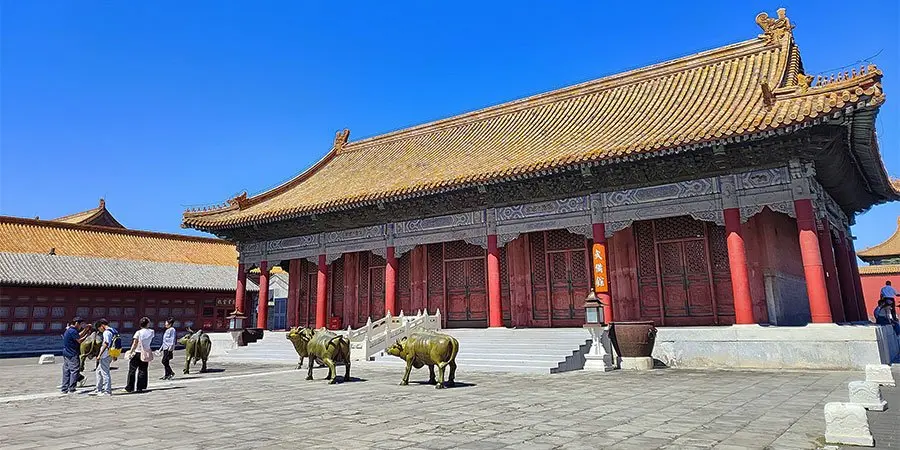
The Arrow Pavilion is a small detour within a much larger museum day. Secure a Palace Museum ticket first; then decide whether the military-culture displays are open on your date and worth the extra walk.
- Palace Museum standard admission has commonly been ¥60 in April–October and ¥40 in November–March; confirm the live price in its official ticketing channel.
- The museum is usually closed Mondays except some holidays; check the dated Palace Museum calendar.
- Allow 20–30 minutes at the pavilion, plus walking time from the central route.
- Enter through Meridian Gate; use the current museum map to locate the pavilion.
Book the museum day before the side stop
Palace Museum admission is the first requirement. A hall or exhibition can have its own access condition, so a general museum ticket does not prove that every interior display is open.
Book the museum slot under the visitor’s required identity details. Check that the pavilion appears on the current open-area notice.
Do not build the whole day around one display case. Keep the central palaces as a worthwhile route if this side stop is unavailable.
Start with the Palace Museum’s south-to-north visitor flow. The Meridian Gate is the usual entry and the Shenwu Gate the usual north exit; the Arrow Pavilion is a detour within the grounds, not an independent street entrance. Save the current museum map before walking away from the central axis.
- Ask staff for the pavilion if an exhibition route is diverted.
Our Forbidden City visit tips explain the larger route.
The ¥60/¥40 amounts are standard-admission reference prices, not a quote for a future date. A useful planning window is 08:30–17:00 in April–October and 08:30–16:30 in November–March; closing and last entry can differ. The Palace Museum’s official ticketing page gives the payable fare, identity rules, dated hours and any separate gallery arrangement.
Read the weapons in their court setting
Look at the pavilion’s position and the way the museum explains archery, weapons and court ceremony. A weapon in a display case may have a different date from the building around it. Read the object label before assigning a reign or owner.
- Compare a bow or arrow display with the room’s architectural use.
The Forbidden City was both a residence and a seat of government. Military skill at court had political and ceremonial meanings beyond combat.
Spend about 20–30 minutes on the labels and compare the object dates with the building’s story. A display case may rotate; check the museum’s open-area and exhibition notices if one object is the point of your visit.
Leave enough time for the north exit
Allow roughly 20–30 minutes for a focused side stop, plus the walk from your previous hall. A full Palace Museum visit takes far longer, especially when the central axis is crowded.
- Go while you still have daylight for outdoor signs and courtyards.
- Plan a rest before crossing another long court.
Beijing’s summer heat and winter cold both affect the open-air walk. Beijing planning helps place the museum within a city day.
Do not treat a museum map label as a promise of an open interior. Displays rotate and visitor routes change.
Keep your museum booking and identity document together. Avoid blocking doorways while reading or photographing labels.
A guide can explain the pavilion in context, but should not promise access to a closed room.
Do not set a tight appointment immediately after the pavilion. The usual route ends at Shenwu Gate, away from the Meridian Gate entrance, and the return transport needs its own plan.
FAQ: Does the Arrow Pavilion Need Its Own Ticket?
Do you need another ticket for the Arrow Pavilion?
Palace Museum admission is the base requirement. Check the museum’s current open-area and exhibition notice for any additional condition on the pavilion.
Is the pavilion outside the Forbidden City?
No. It is a detour within the Palace Museum grounds, without a separate street entrance.
Does it display only weapons?
The subject includes archery, court practice and the building’s use. Objects on display may rotate.